The Dalai Lama is friends with Richard Gere. I saw the latter emerging from the former’s house on Saturday in Dharamshala, and it made me think about the crossover of worlds. Pretty Woman, Tibetan exile.
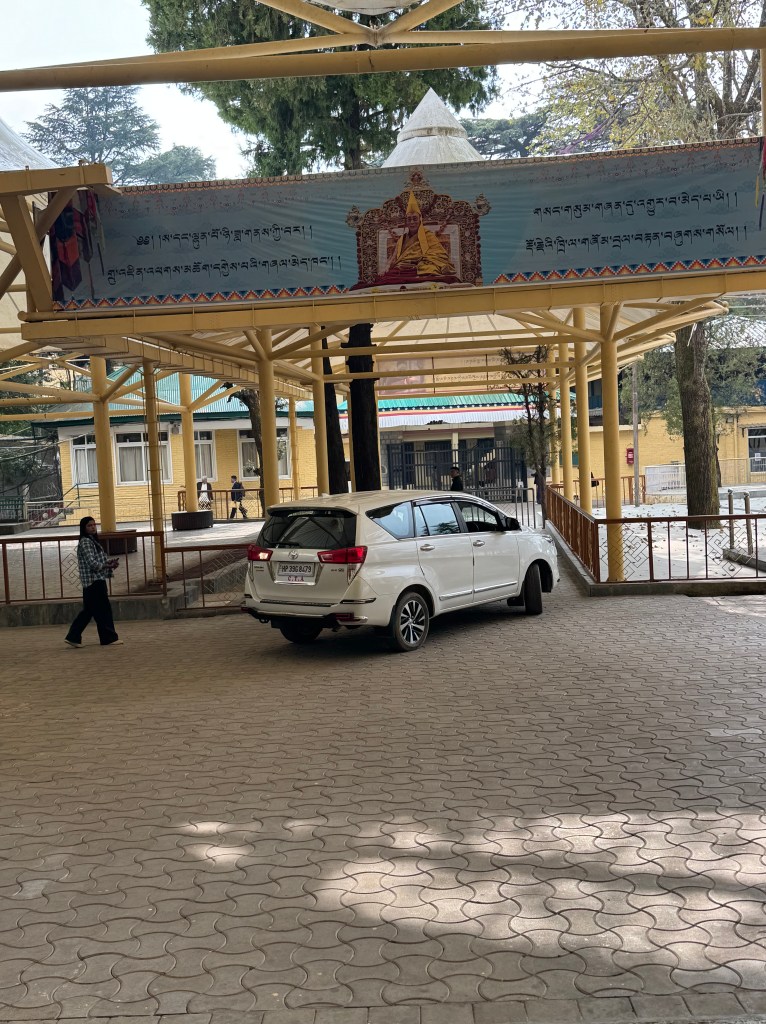
The Dalai’s house is very humble, almost cabin-like. In the shadow of the Himalayas, wandering around the Buddhist temple in Dharamshala is an experience that puts in mind an old school on a Sunday morning, a place of rhythmical activity momentarily not at full use. There were monks around, and a few other tourists, but it was without fanfare.
On a walk around the complex, nature was very much made the centre. All the signs spoke of the Buddhist commitment to the natural world. A few days after the event, this has made me think, tangentially, of St.Francis in the Desert by Bellini.
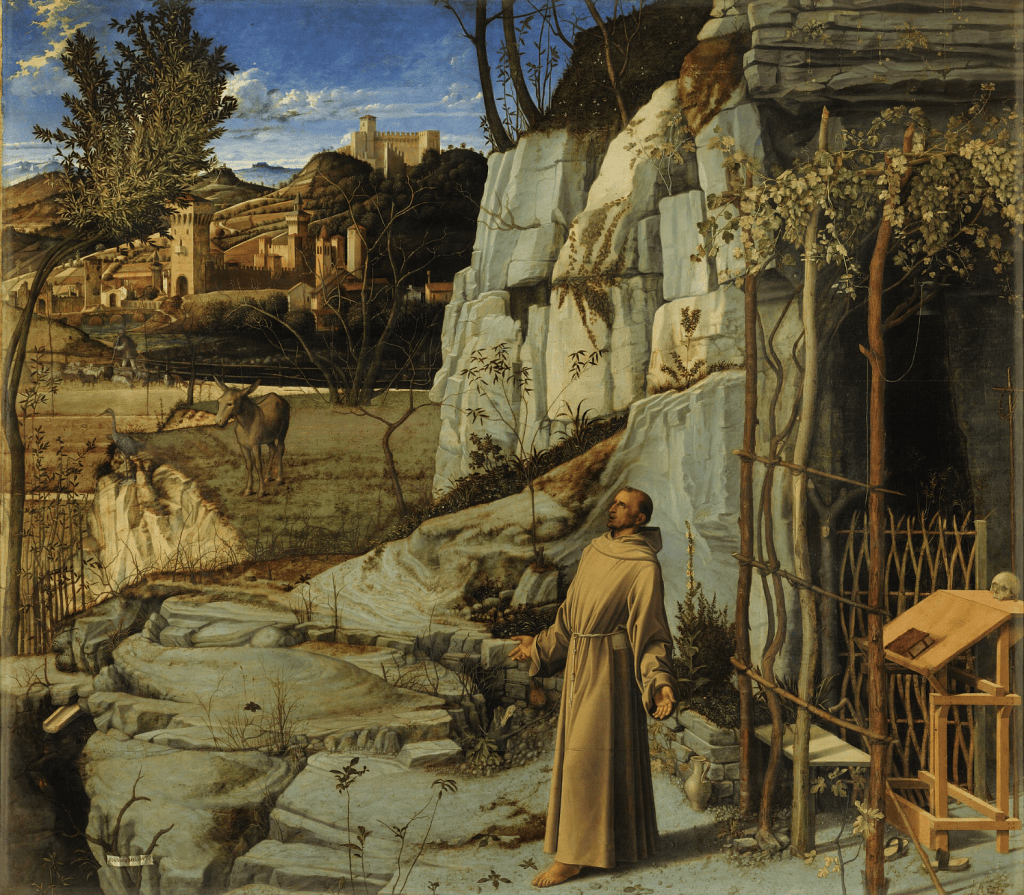
Beaming out of New York from the Frick Collection, Francis is an altogether different religious figurehead to the Dalai Lama, but there are many of the same principles at play. Francis is Christianity’s great champion of the natural world. And we were invited to think of the Dalai Lama as that for buddhism (Richard Gere then for what?).
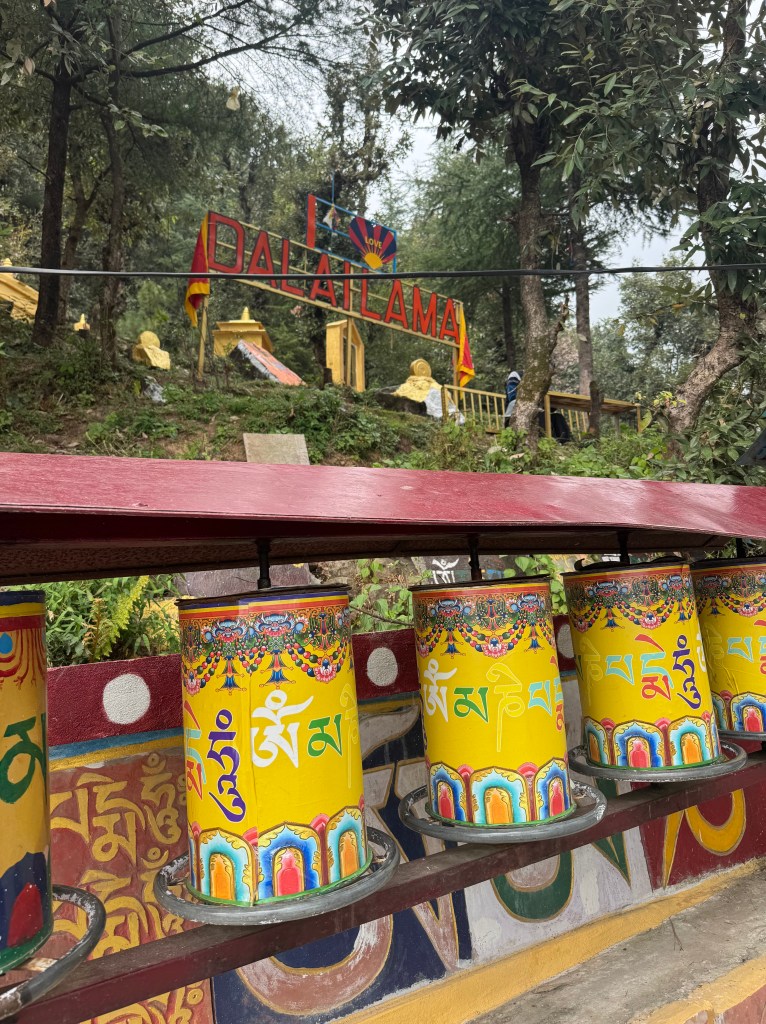
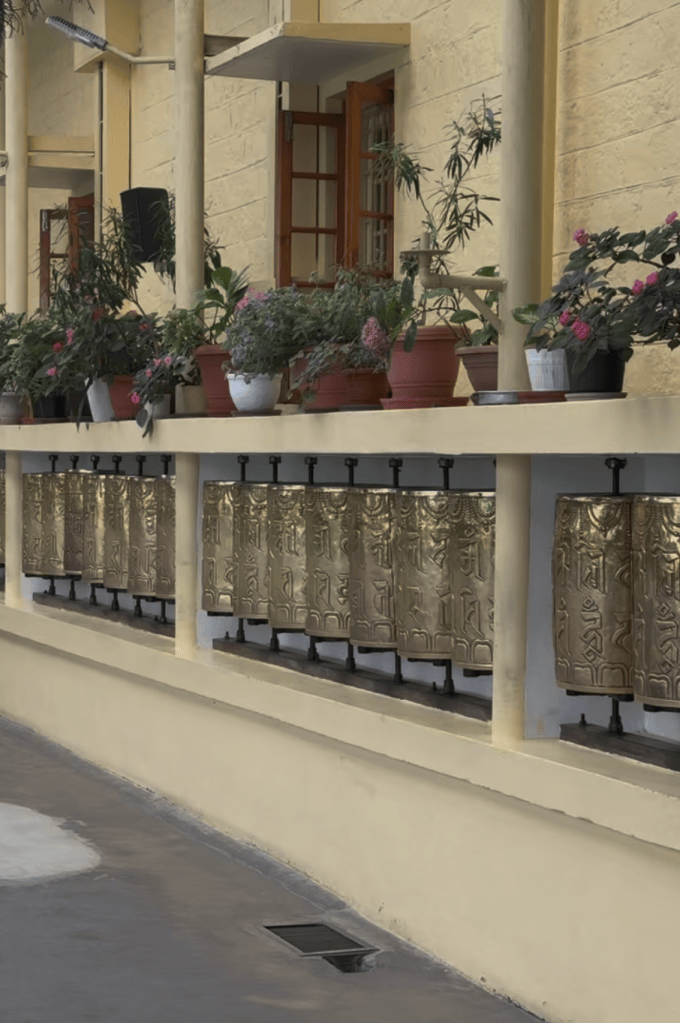
We walked around the grounds of the temple. This is a broadly circular experience which takes you along a carefully maintained path, fringed by prayer wheels, shrines, stupas, and promises to the environment. You are meant to go clockwise, and we realised, all too late, that we were in contravention of this. A well meaning, or derisive German woman, kindly told us as much.
It was mostly pretty quiet, the odd monk or lay person stopping at a prayer wheel, a dog snoring. St Francis in the Desert contains a similar quietude. The world just continues blithely around its subject.
Francis seems to have received the stigmata in this painting. Satisfyingly, the wounds are not as emphatic as is often depicted. The Frick have confirmed they were painted by Bellini, but oh so softly. Crucially, here, with Dharamshala in mind, we don’t actually see what Francis is experiencing. We see Francis, we see the celestial light (or sun through Himalayan cloud), we see the rocky outcrop-his cave, but we don’t get a vicarious experience of his revelation. That is between him and his creator. Instead we get the domestic entangled in the natural, a rabbit peeking out, a pair of discarded clogs, and generally, the co-existence of the man-made and the world around it. To my mind that chimes with watching a monk flip through prayer beads. I am outside the moment; witness, not agent.
Bellini’s painting is about spring, about nature at a point of resurgence and renewal. Dharamshala over the weekend had the tilt of a different transition; the evenings teetering on cold, the wind hinting at what the mountains will soon become. In many ways it is a strange place, filled with a spectrum that covers the life-long dedicated and the spiritually washed-up or washed-out. There is anger towards China, there are cafes pronouncing freshly baked German sourdough.
Back to Francis. Our saint died in 1226. His legacy is his order, and his commitment to the environment. He is fundamentally not of concern to Dharamshala. And yet, as one of the great heroes of the natural world, it is hard not to imagine him wandering about these climbs, enjoying (some of) the atmosphere. He’d recognise the monks, I like to think.
Poised between seasons and religions, we got out of our wrong-way one-way walk. When we look at the world, we often do so like we look at St.Francis here. We might see the event, but we might not directly experience it. Bellini reminds us that art is one of the important resources for negotiating that gap. Art needn’t reduce the distance between observer and subject; the distance is fertile and it asks us to attend to what exists between the two. Put simply, Bellini and the monastery remind us to be attentive, and to imagine ourselves in someone else’s clogs.


Leave a Reply