It was 7.37pm on a hot Friday. Admittedly a very hot Friday, which might precipitate the swollen numbers in the icy halls of the Royal Academy. There could easily have been 500 people there.
I couldn’t help but feel that an important thing was unfurling itself before my eyes, or rather, less solipsistically, an important thing has been unfurled. The Summer Show is a visual statement of one of England’s most important art institutions. It is a barometric reading of national output and national interest in the arts.
And so, duly, there was the full pantheon of work; at every turn something might be original, awkward, mesmerising, weak, sensational, sensationalist. There were pale and obvious copies of Scully, Basquiat, Emin, Wylie. There was a wall of cats – there are always cats (most painfully and recently at the Affordable Art Fair in Hampstead).
There were themes like the natural world, which, removed from the inferno of Picadilly, was perhaps a well placed ode to the environment. There was a room where most of the work was good, and a room where most of it was baffling. Ryan Gander did the best job with his selection. It is reassuring that his choice avows a vital interest in the well-conceived.
Some of the work was well framed, some unframed, much in need of re-framing. There was an array of cardboard boxes that could either be a well pitched satire of Gormley, or a mangled tribute act.
All of this I took in alone, among the Friday dates, among the postulating:
‘That’s a photograph of a performance artist called Marina.’
‘Oh yes, the one that owns Chelsea?’
‘Owned, yes.’
I’m not being snooty. Well, I am. Not at the punters, to be clear. Or rather, not at the visitors. Not, also, at the makers. They should send in whatever they want to send in. I suppose my snoot is directed at the widespread erosion of the contract between viewer and work; the fine, fragile moment where you first see a painting and apply your senses to it. That interaction, when – and I’m over sharing here – a work is really good, and there is an almost tangible, physical response to what is before you and you need to shuffle your feet, breathe in, change the angle of your neck, step forward, retreat. Art needs to stop you, not in your tracks, not because you feel screamed at, but because it is before you, and you it, and, momentarily, there is nothing else in the world other than that confrontation. And if it is good, and you want to be in front of it, most likely for a reason at that point which you cannot articulate, then it has achieved its aim. It might not surpass that aim, it might not withstand further appraisal, but it has to hold you and not be dismissable for all the reasons you might dismiss it. In our oversaturated visual world, that is the first hurdle.
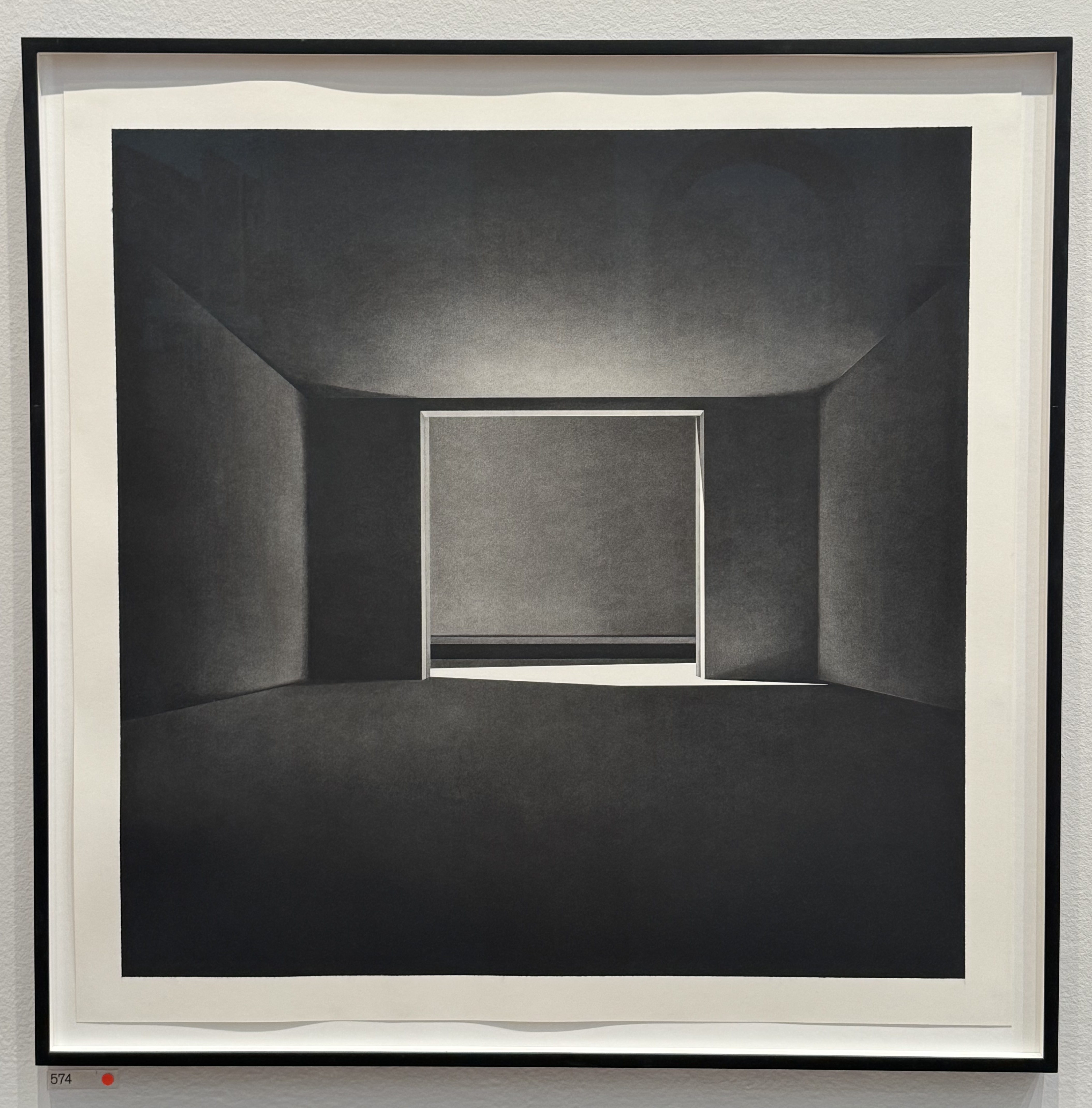
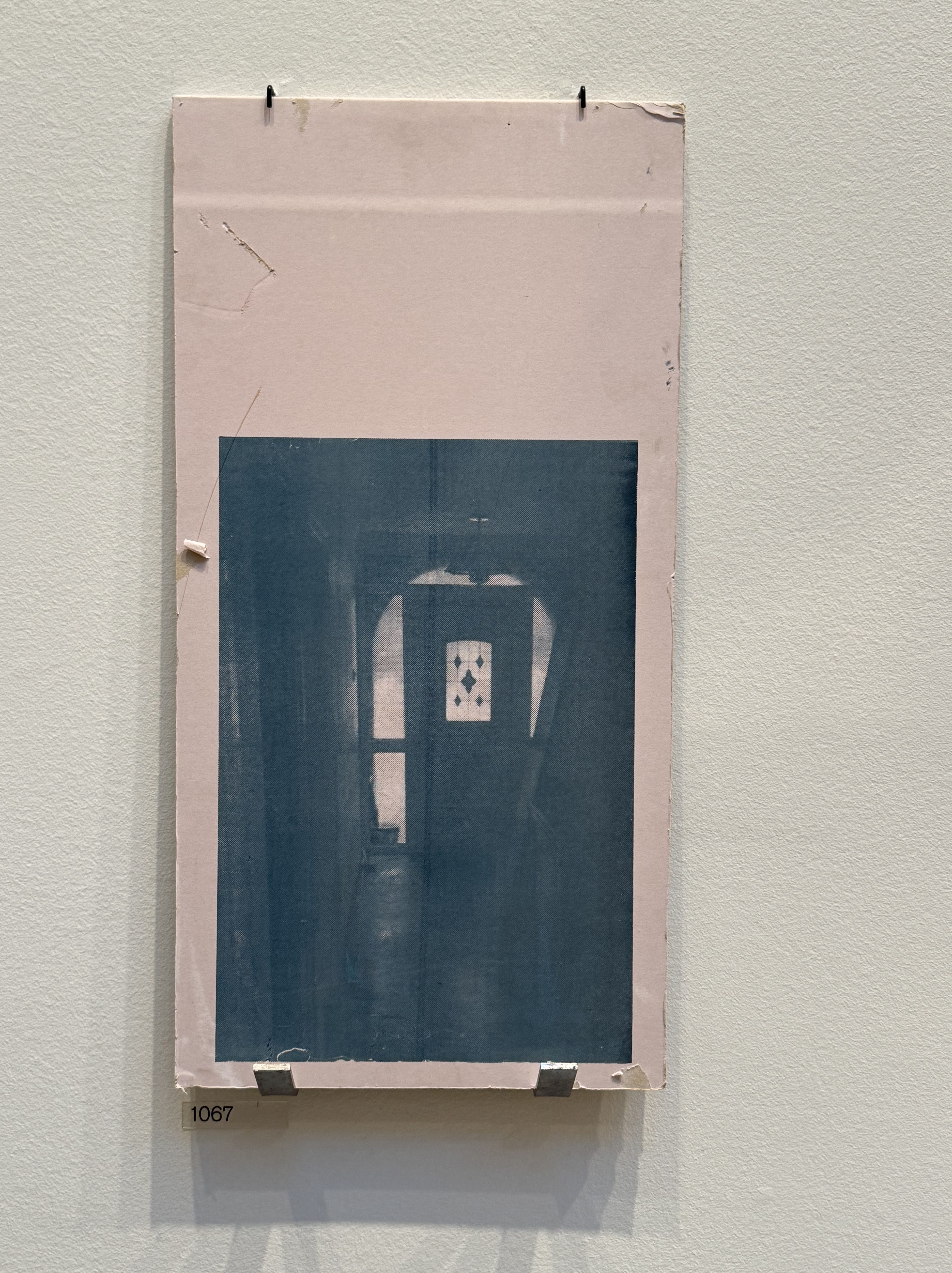
The above, below, and bottom of this, show some of the 11 works I might have tried to buy.
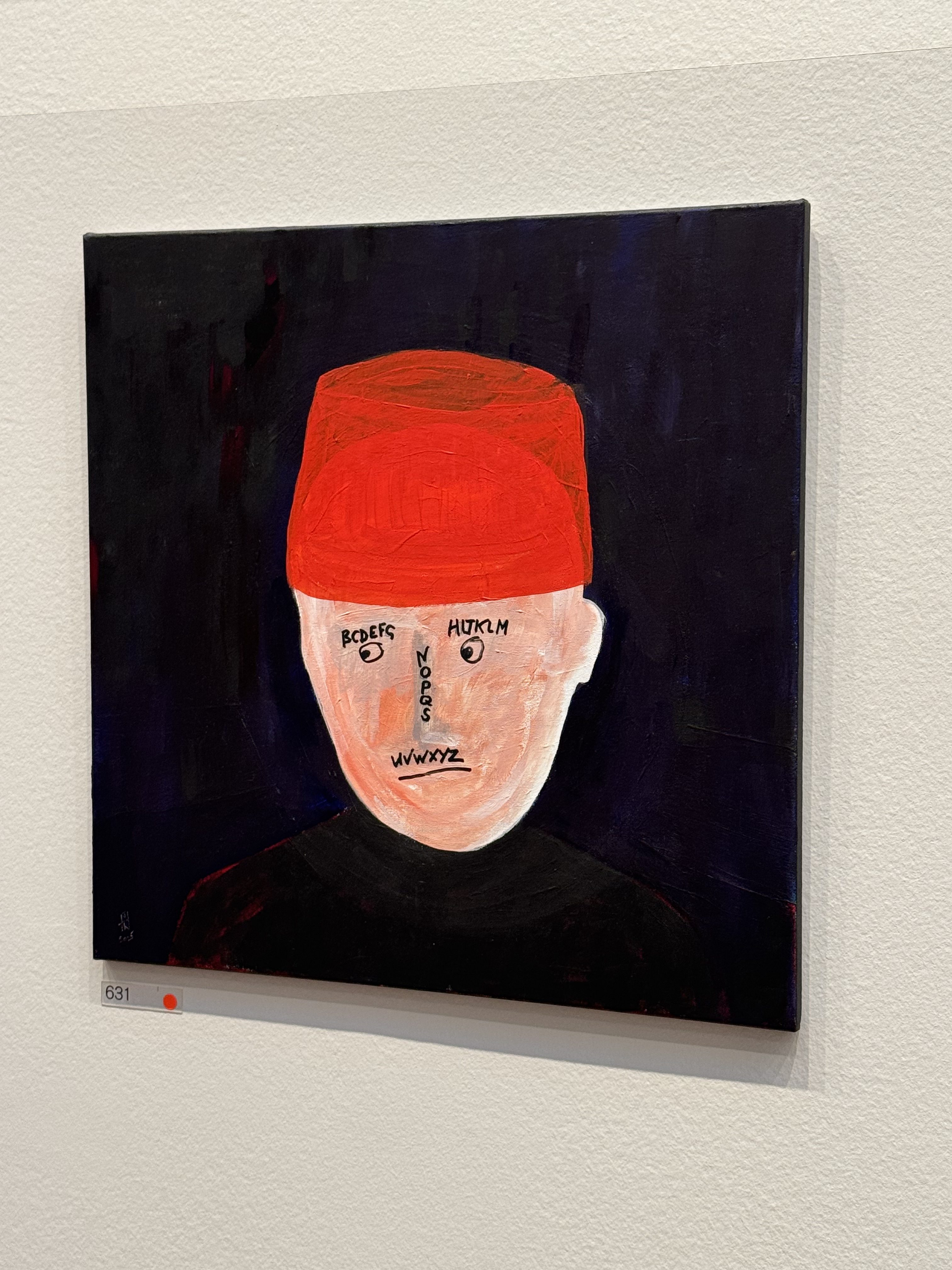
Sadly I bought none of them. It is perhaps particularly nice to go to the Summer Show when things have sold, and you are looking without the persuasion of availability.
And then from the RA I went to the National, for the last 23 minutes of the Friday Lates. I wanted to see Zubarán.
This was the first work I saw:
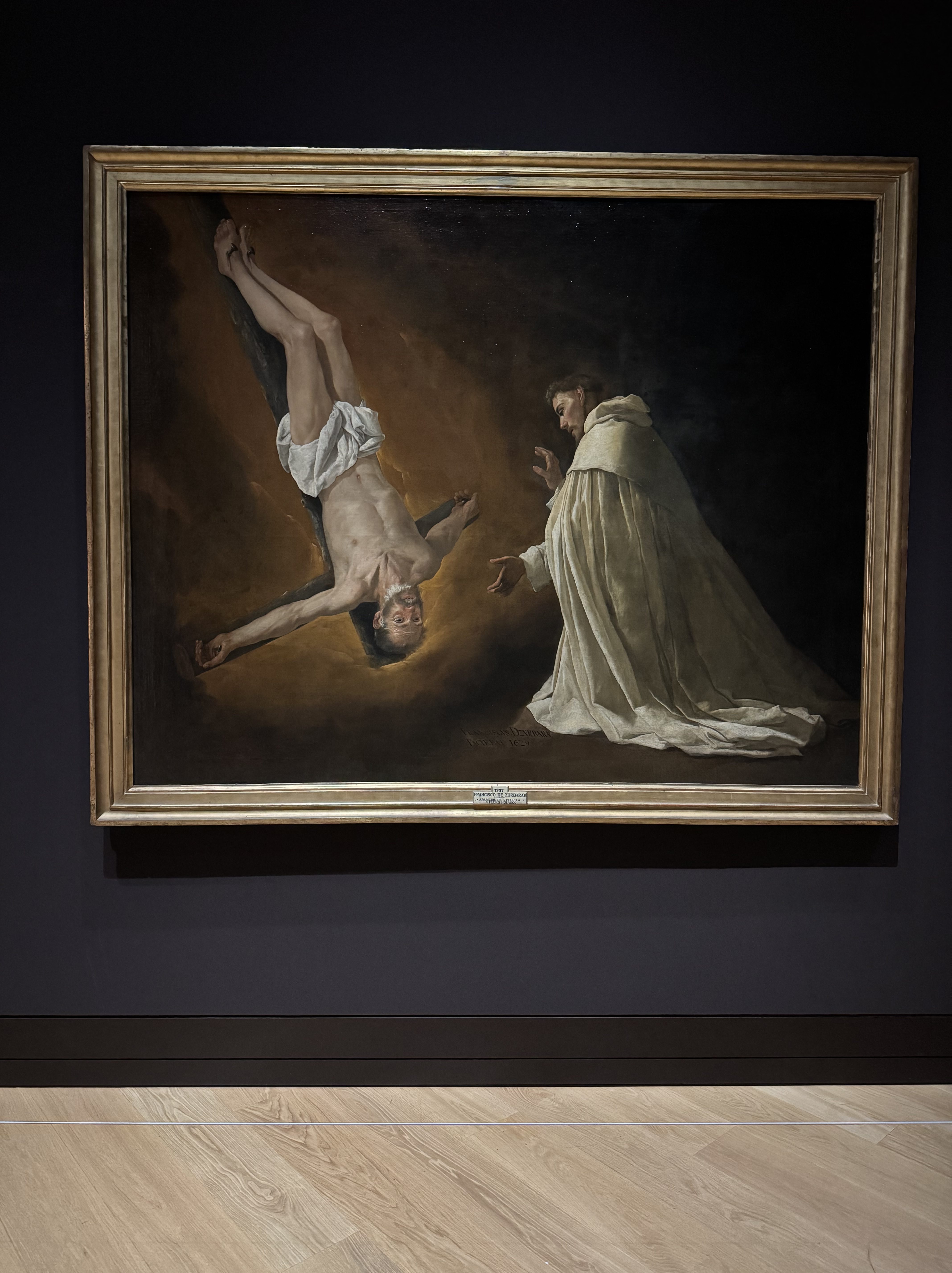
While it is not at all fair to compare the two experiences, I am going to, because I want to labour the point.
This painter, this zealous Catholic Spaniard, born almost exactly four hundred years before me, understood the contract. It goes without explanation that you are looking at the real deal. Not because it is in the National Gallery, not because of anything religious, but because this is about a flat surface that has been worked until a point which is able to stop its viewer from leaving it. There was a man in a foldable chair, sitting to the side of it, watching it like it was England Mexico at the World Cup. He seemed to be caught by it, ensconced in the confrontation.
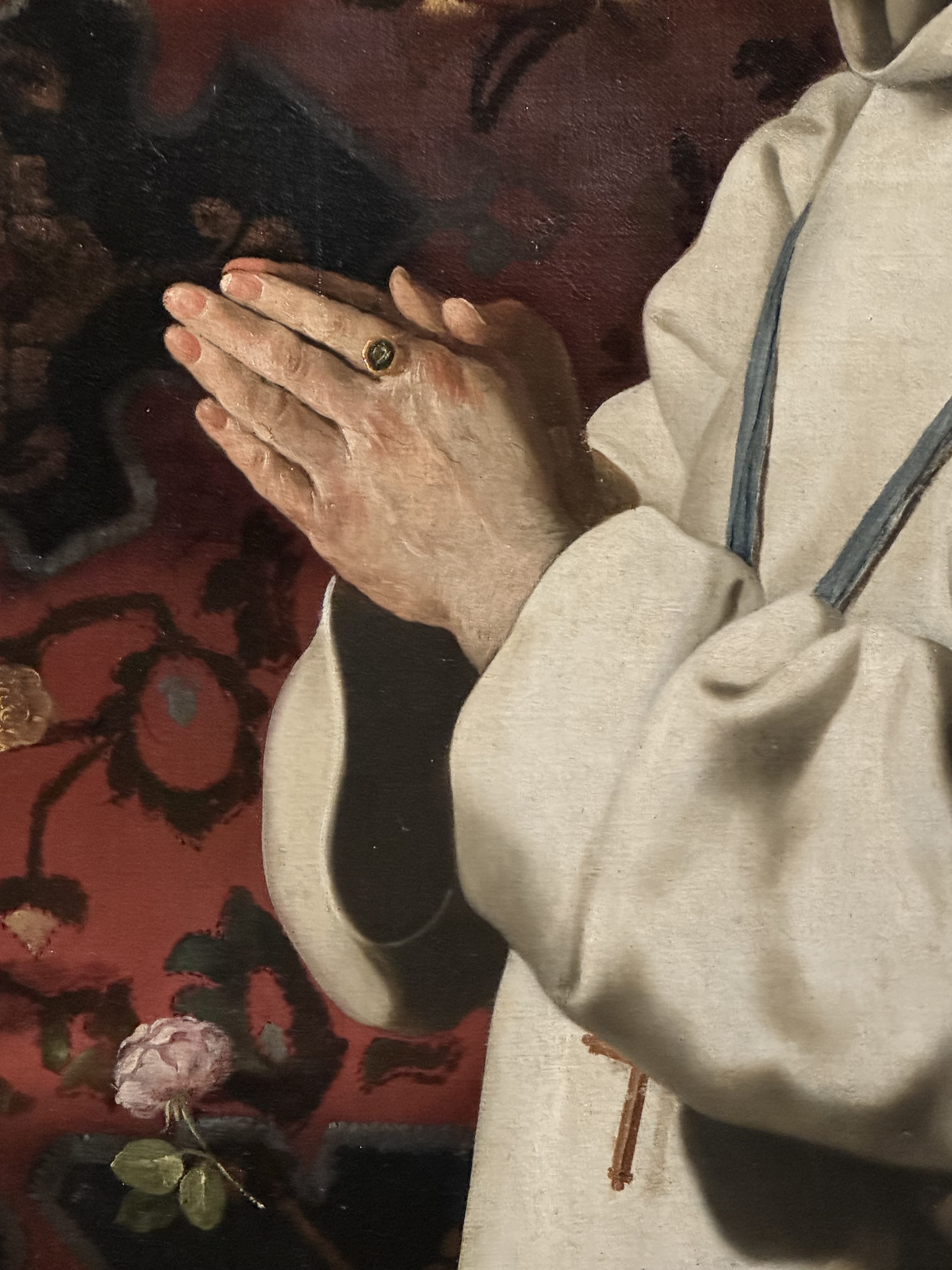
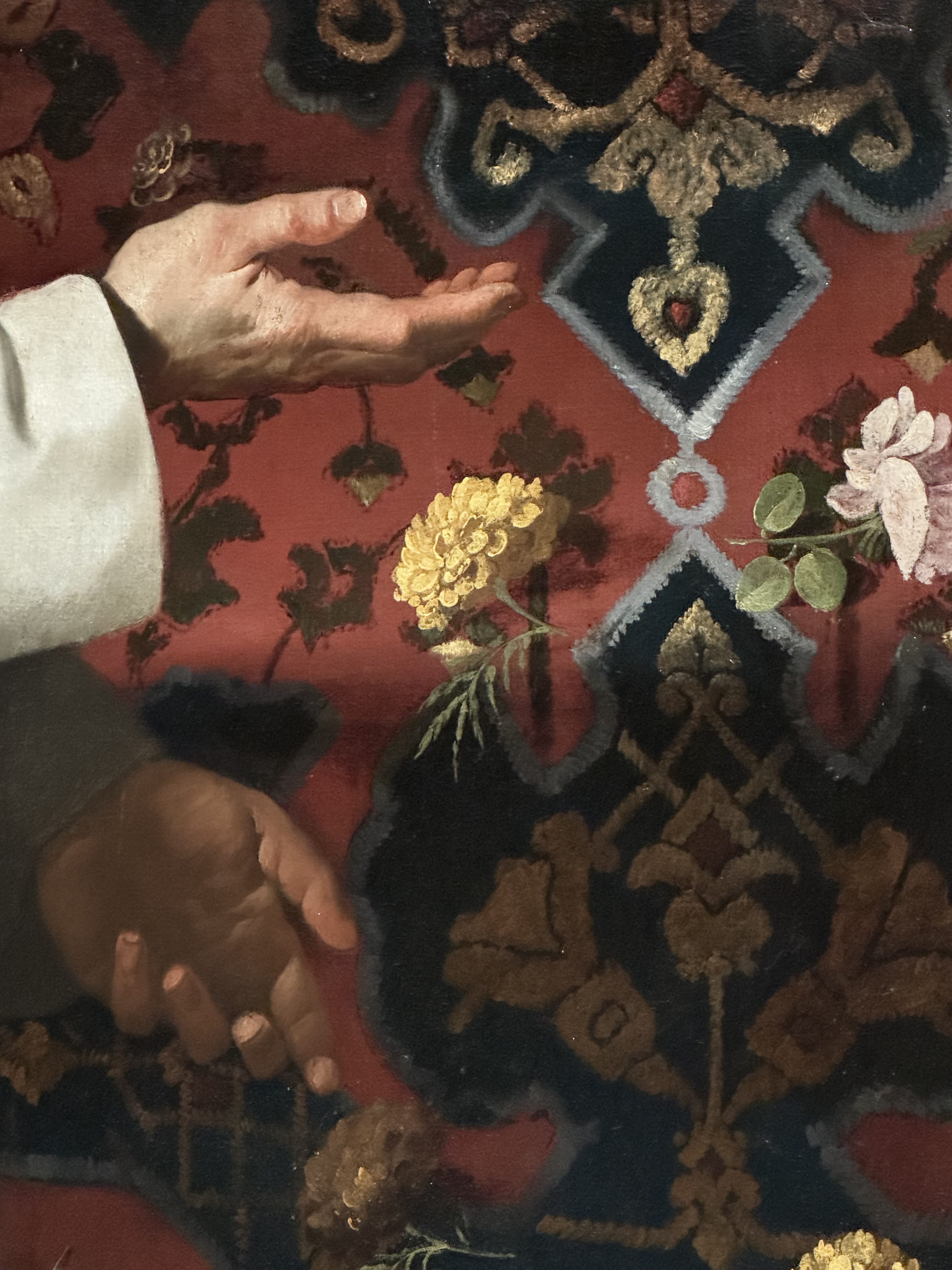
Then these hands, the fabric, the folds of St.Francis’ habit. A music producer who I love, when speaking of a song he thinks is doing something extraordinary, says ‘Are you stupid? Are you mad?’. I stood in front of the rope below, Owen Cutts’ words repeating in my head, trying to get further with what I was thinking. Something reminded me of Salieri’s jealousy in Shaffer’s Amadeus as the former describes the ‘unfulfillable yet fulfilling need’ of a Mozart adagio. It was as if I had brokered the interaction of the Summer Show with these paintings tucked away in the bowels of the National, and the RA was smarting, uncertain of what it is in relation to this body of work, Salieri to Mozart.
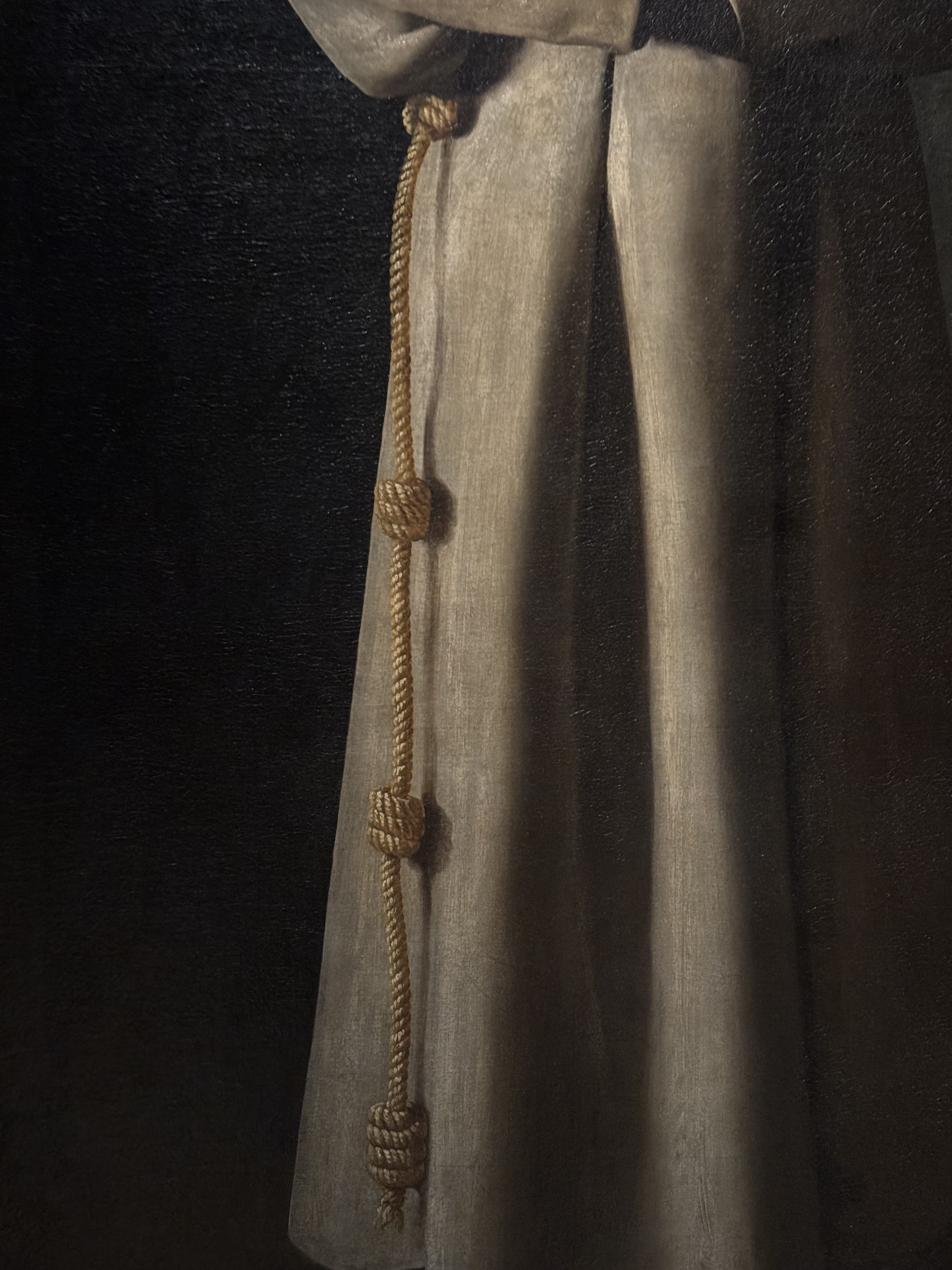
I rushed through the rooms, plunging about until I had found the ones I thought I wanted to spend the most time in front of (I had to utilise my 23 minutes).
‘Did you see the grapes’, a friendly (and evidently Spanish) security guard asks.
She was referrring to these, by Zubarán’s son, when he was 18 (perhaps 19):
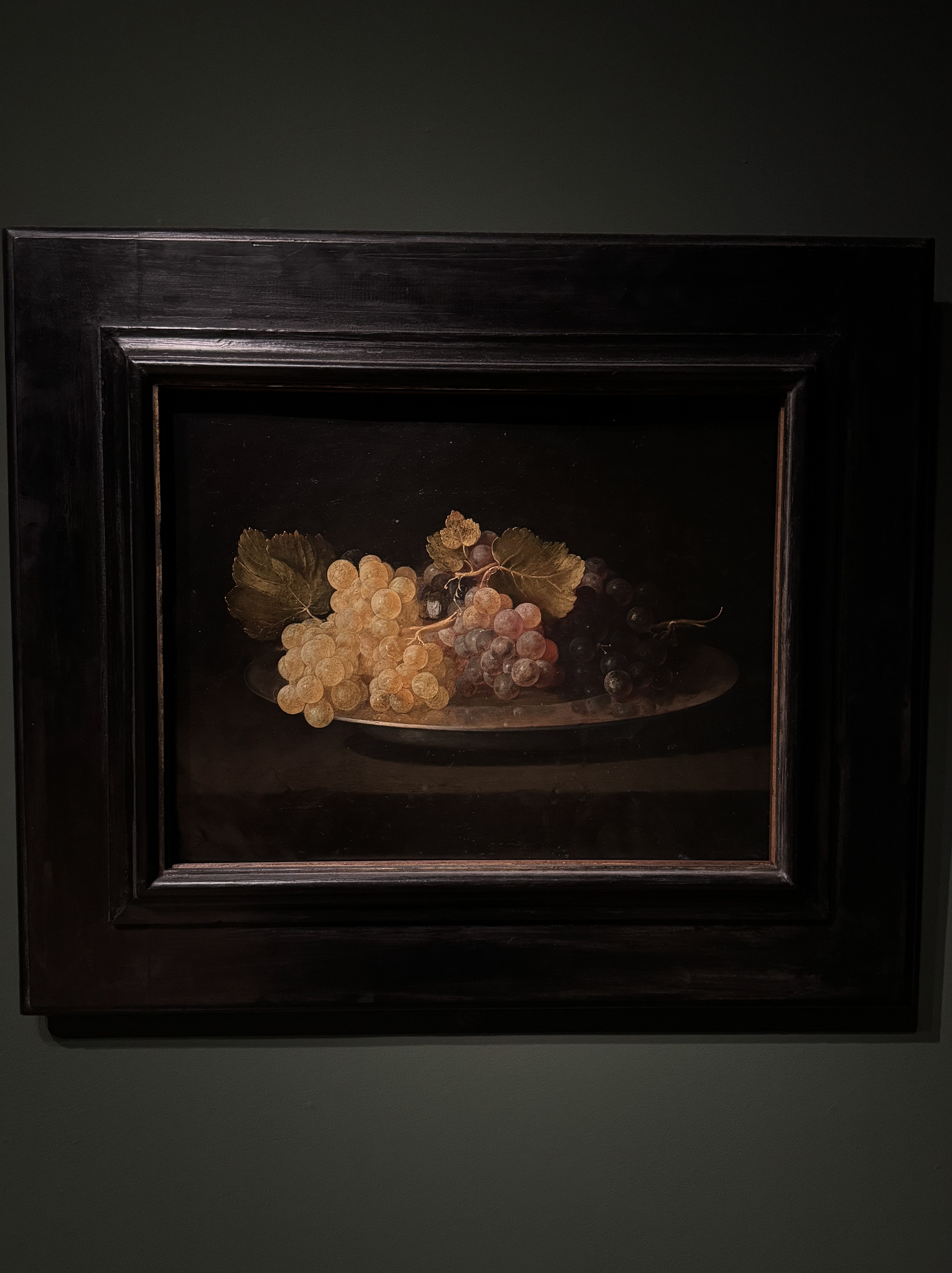
‘I did’, I say.
‘They make me thirsty and hungry’, she replies.
–
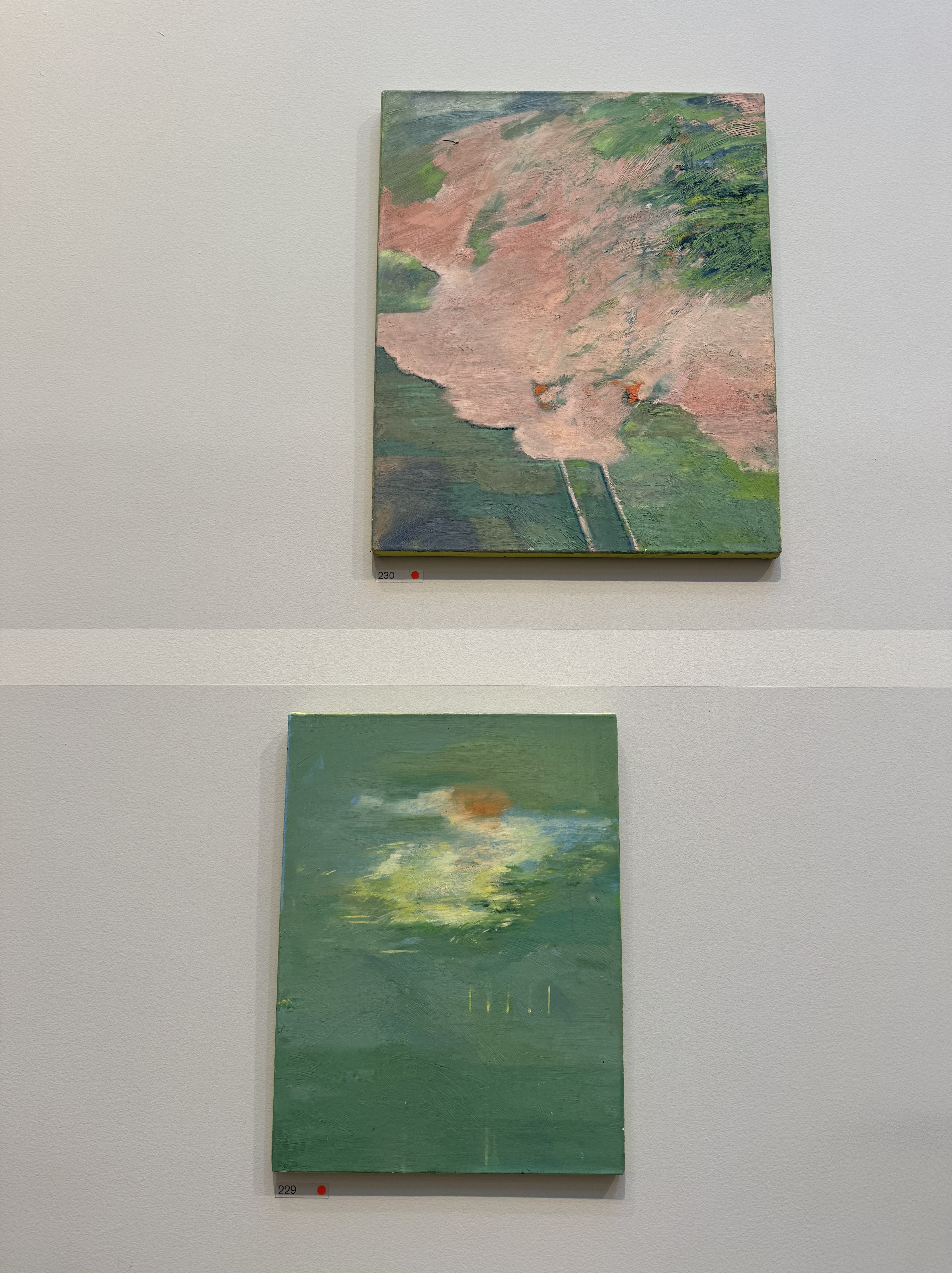
Two more from the RA:
See ya.


Leave a Reply