GV : What world(s) does your work want to exist in?
HK : My works is deeply influenced by personal memory (but more recently I have been thinking/wanting to see what would happen if it meets at the intersection of personal memory and collective history – more specifically personal memory and how individual experiences carry the weight or the echo of their memories.) My work occupies the emotional landscapes of trauma, healing and resilience – often drawing from the intimate world of lived experiences – while reaching outward to engage with the viewer.
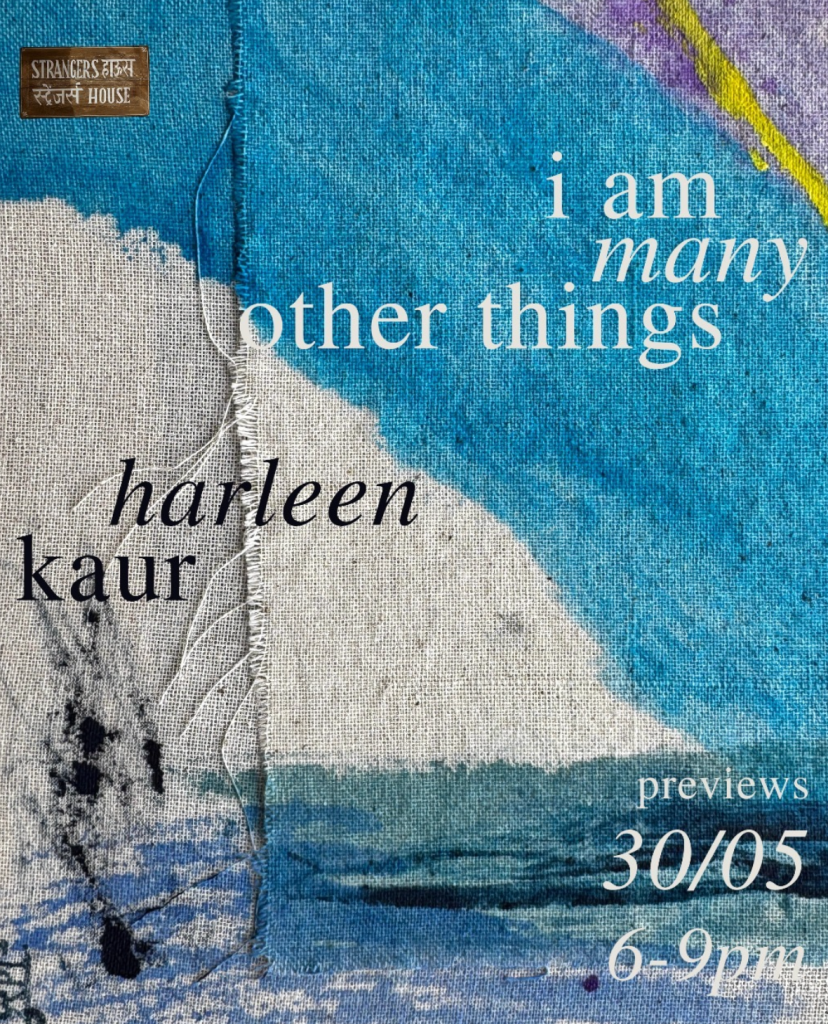
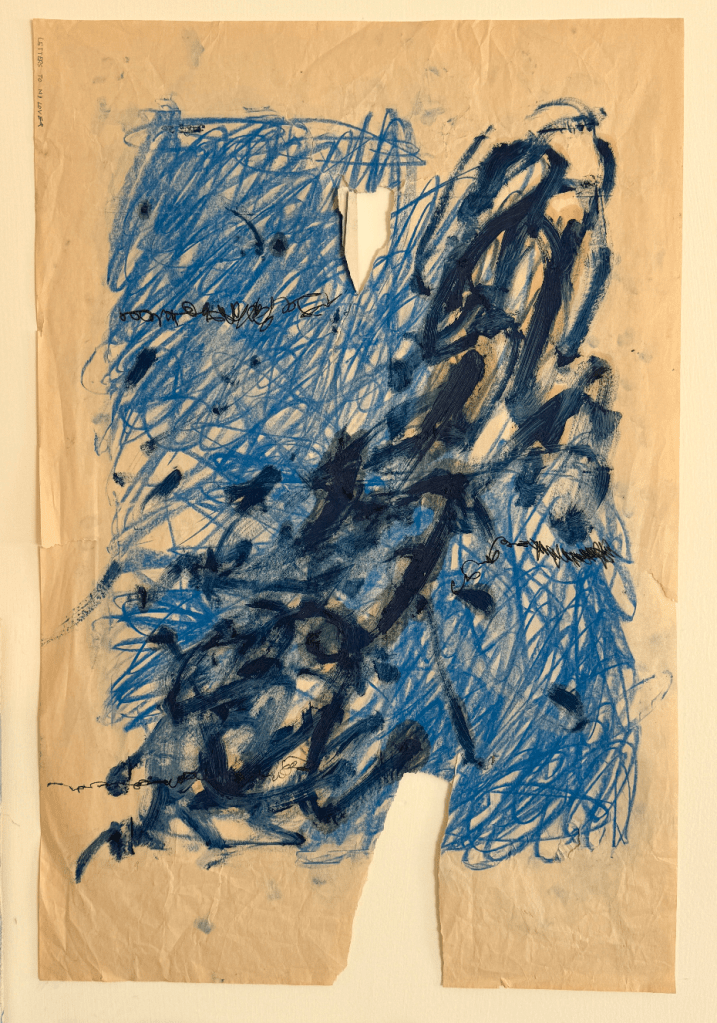
It exists in the world of abstraction, where language sometimes fails and image takes over; a world where the subconscious is allowed to speak in forms, textures and gestures. At the same time, it moves within the world of archives and storytelling through paintings, books and drawings that act as containers for fragmented narratives.
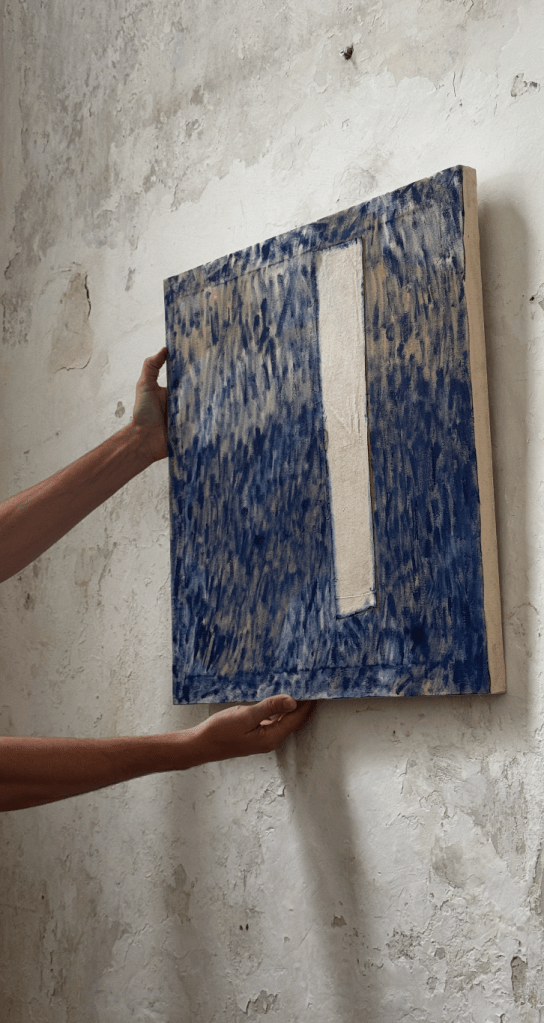
It is rooted in the physical world of canvas, paper, pigment and thread but also in the imagined, remembered and reconstructed spaces of personal memory and “belonging”.
What does your work explore?
I am interested in how the body holds memory, how pain can be transmuted into material and how abstraction can serve as a language for what is otherwise unspeakable. (sometimes -my work takes the form of visual essays- artist books, delicate drawings that invite reflection, vulnerability and dialogue)
I work slowly and instinctively, my book and drawings are built layer by layer, like journal entries or maps of emotional landscapes. Each piece becomes a container for somethings I have felt but could never say.
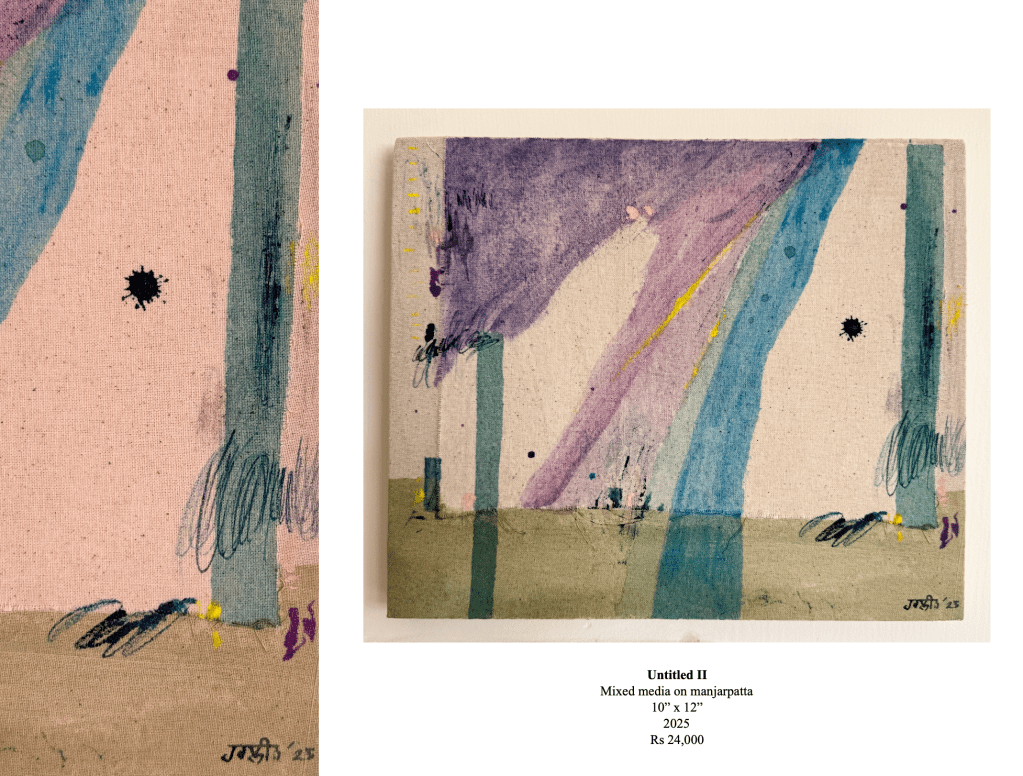
In that sense my work is less about telling a story and more about “holding” one. There’s no linear message or plot embedded in the work. Instead, what I make becomes a container for emotion, memory and fragments of experiences.
Do you imagine a viewer?
No, not at first. My process begins in solitude, with no audience in mind. It’s a way for me to understand myself, to give shape to things I haven’t yet found the language for. The work is often a private act of reckoning, healing or remembering.
But somewhere in that process, the idea of a viewer does appear – not as a crowd, or even as a public, but perhaps as one person. Someone who has also felt grief, displacement, or uncertainty about where they belong. Someone who might not need the work to explain itself, but who might feel seen by it.
I don’t imagine a viewer needing to “get” everything, I just hope they sense something (an emotion, a texture, a silence – that feels familiar, perhaps comforting). In that way, the viewer becomes a quite witness. Not a critic, not a spectator but a companion in the emotional landscapes the work opens up to.
So yes, I do imagine a viewer. But gently. Softly. As someone I’m in conversation with – even if we never meet.
What theme/artists motivate and excite you?
There have been many artists that motivate me. One among them whose practice I have followed closely for years is Zarina Hashmi.
Her work makes space for an emotional depth that is neither loud nor didactic, but deeply felt. What excites me about her work is how it holds pain and beauty in equal measure, how it translates the unspeakable into form through restraint, precision and sensitivity.
Her use of minimal abstraction – a single line, a torn edge, a texture surface – gives weight to the ephemeral. In her hands, paper becomes a site of memory, fragility and resilience.
I’m especially drawn to the material intimacy of her work- handmade paper, gold leaf, ash, thread – materials that carry their own histories and evoke a sense of the sacred, domestic and vulnerable.
Zarina’s recurring themes – home, exile, language, belonging – mirror some questions I return to in my own practice. Yet she doesn’t offer answers or fixed narratives; instead her work opens a contemplative space. That has been deeply motivating for me, not just in terms of subject matter, but in her approach to art-making as a deeply personal, almost meditative act.
Her work – Home is a foreign place, feels specially significant. It reminds me that it is possible to tell a story without spelling it out, to let form and feeling carry meaning. It affirmed my belief that the personal can be universal, not by being loud, but by being honest and exciting.
Zarina showed me that abstraction can be a form of storytelling and that tenderness when held with integrity can be radical.
If you were asked to distil your interest in making work into one idea(!), what would that be?
*my work is rooted in both solitary process and a deep, quiet desire to connect.*
If I had to distil my interest in making my work into one idea it would be this : To create a space for an emotional encounter – a space where what I feel and what the viewer feels might gently overlap.
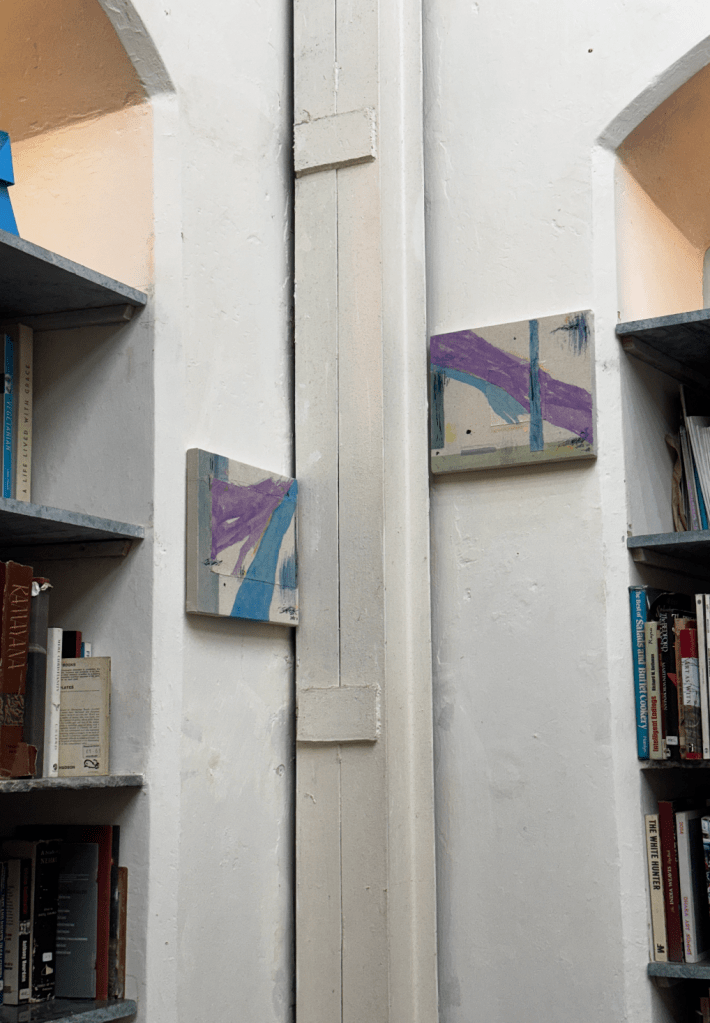
While my process begins in solitude – through painting, drawing and writing – the ultimate form it takes often longs to reach out. That’s why I would be drawn to making an installation, as it allows my personal work to extend beyond the frame, to become something lived, shared and inhabited. It transforms the act of viewing into something more tactile, embodied and open-ended.
I’m interested in creating environments that invite reflection – rather than demand interpretation – places where viewers can slow down, feel their own emotions and maybe find parts of themselves within the work. It’s less about directing a response and more about offering presence, intimacy and quiet resonance.
At it’s core my work is about – connection – not loud or immediate, but slow, tender and real.
I find your work resists a fixed interpretation, do you agree with this, and if so/not, how does it fit in your head?
Yes, I think my work resists a fixed interpretation. That’s not a by product of ambiguity but a core strength. This resistance isn’t about being evasive – it’s about protecting the emotional nuance and making space for the viewer to meet the work on their own terms.
The way the composition is set with colour, texture, negative space and gesture is very intentional. The forms and materials are a language that is personal and felt but not declarative.
Each mark I fragment is deliberate, yet “open” – like a memory that’s softened around at the edges, or a thought paused mid-sentence. This openness is where the work breathes.
The work begins in solitude – inward, intuitive but ultimately reaches through the tenderness of smaller works or the intimacy of scale (with my bigger works).
I am not creating puzzles to be solved, or symbols to be decoded. Instead, my work invites a slower kind of attention – one that’s emotional, not analytical. And that’s why it resists fixed meaning: it allows the viewer to complete the work with their presence.
In my head – I imagine this isn’t about withholding meaning but about honouring fluidity – letting something exist in a suspended, in between state. That’s where tenderness enters.
I am not making statements. I am creating space.
Harleen Kaur lives and works in Delhi.


Leave a comment