I exhibited the works below last week in London with my friend and business partner, Goose Leigh.
It may be worth saying that the exhibition had no title beyond Edit 01. This wasn’t a cop-out (we hope). Rather, it reflected that the show was an offering of an India we have encountered – and, in that sense, a response to a question we are often asked: What does Indian art look like?
Perhaps this exhibition is the beginning of an answer. But it also poses another question: does the art of a country look like something at all? Can it? And if so, where do you draw the lines of that country? Where does India stop?
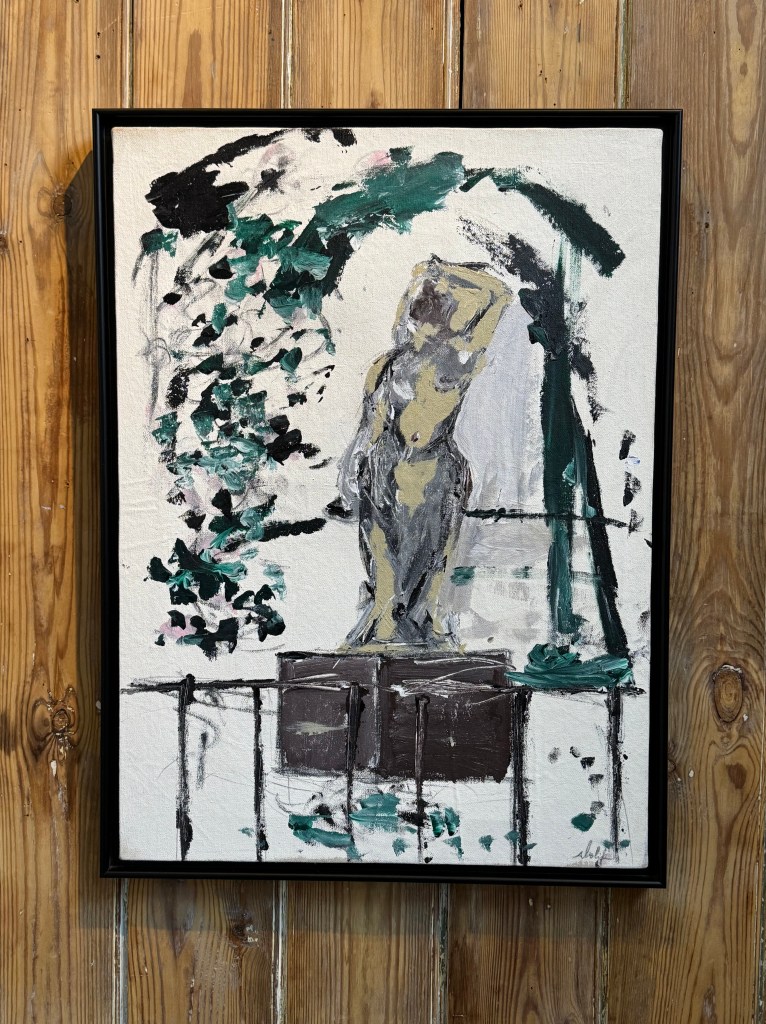
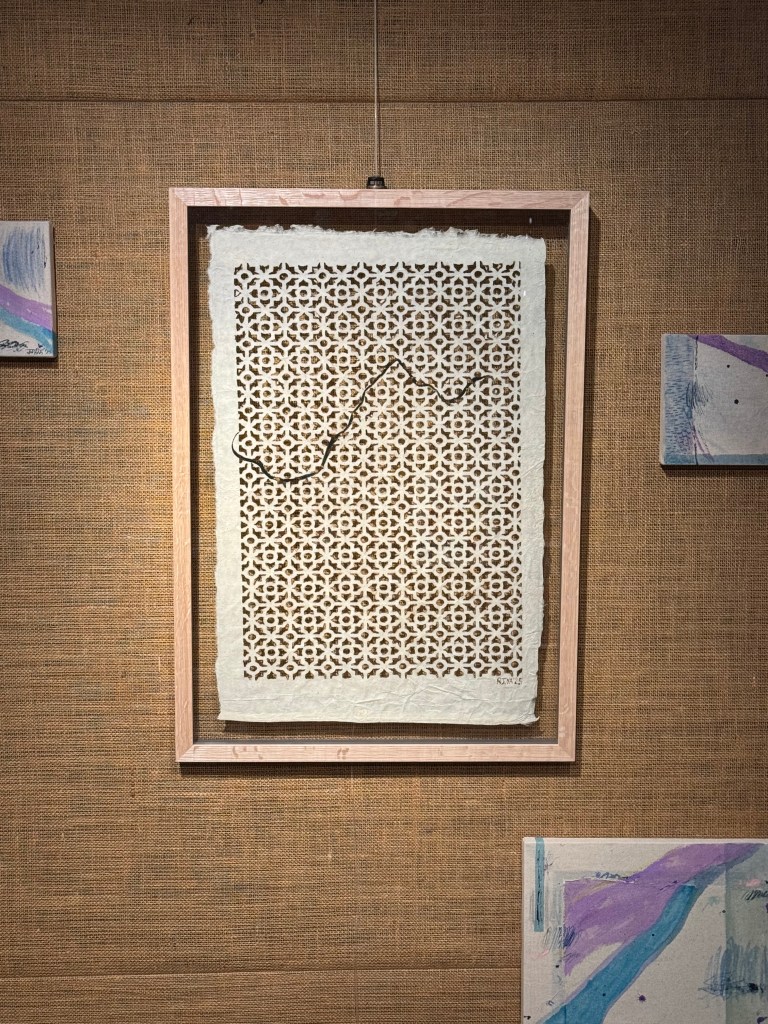
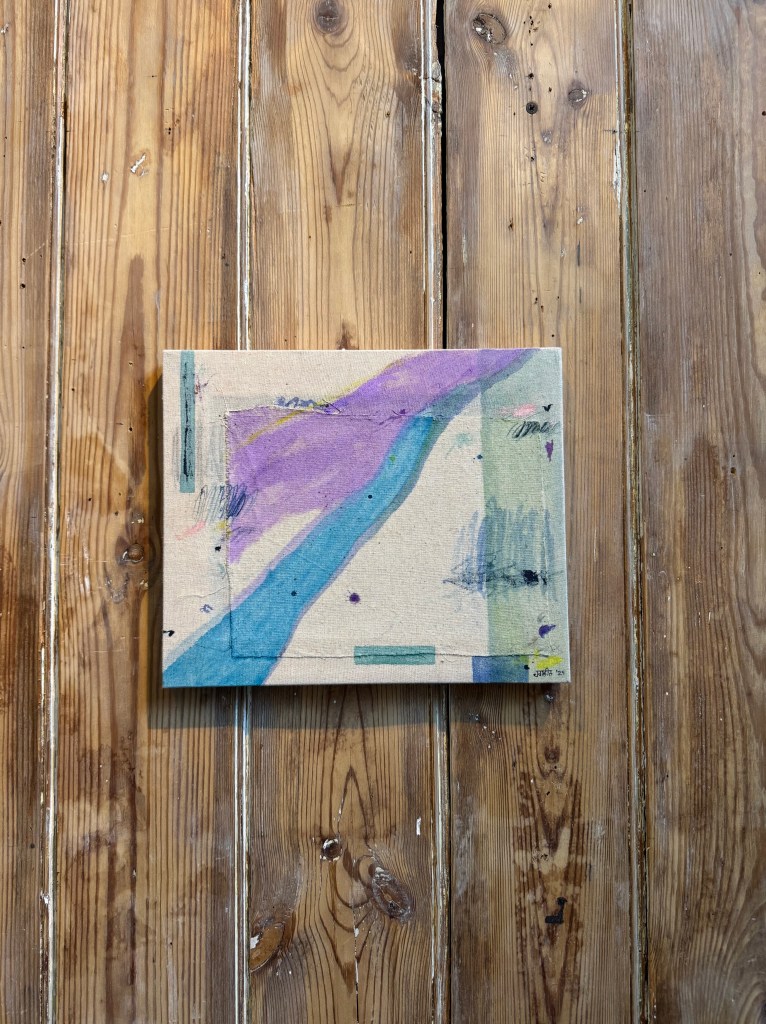
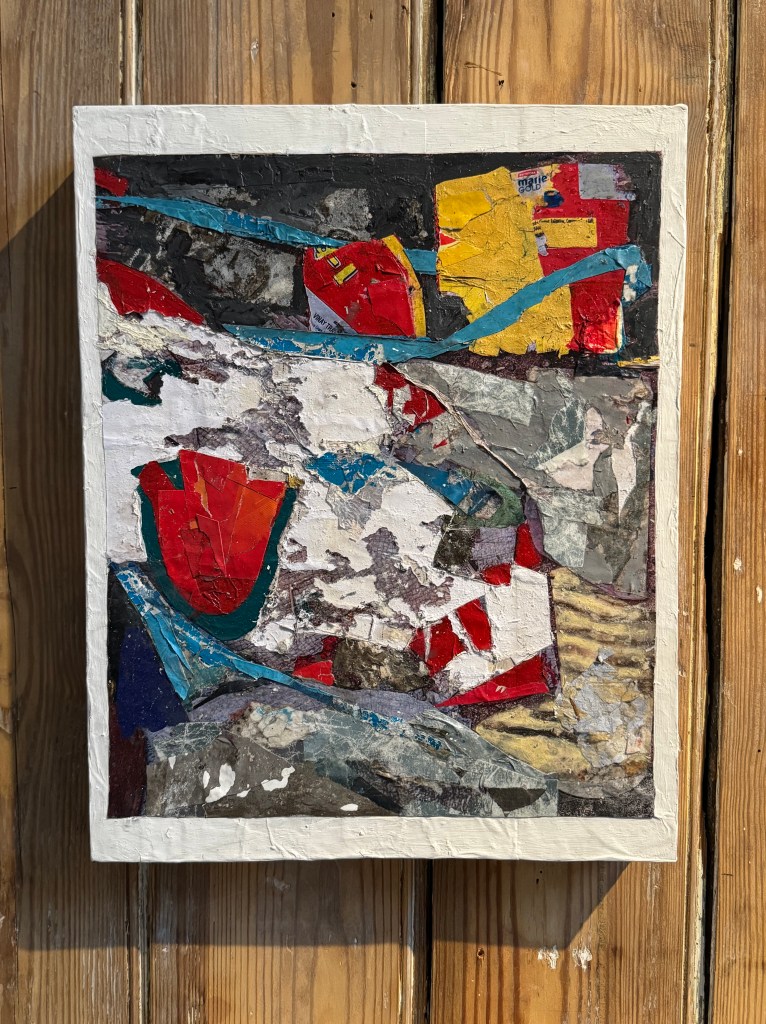
I’ve resisted looking blankly at the bearer of that question (tempting as it may be). Instead, I’ve tried to work it out. Indian art might look like Mukhtar’s soothing expanses and symbols of esoteric Islam, or Riya Chandwani’s delicately burnt patterns, or Harleen’s twisting blues. It might look like the American artist Kacper Abolik’s acrylics of Bombay, or his fellow countryman Max Strong’s collages, forged from the streets of Mumbai and Jaipur. But then, it might not. Because these are just five examples.
So while a country may offer a visual definition of itself through accumulation, what I really want to reply – unflinchingly – is how inevitably inadequate any answer will be. Indian art, I might now say, simply looks like the person you (or I) have never met, and the countless faces you (or I) will never see.
That was a maxim of a former English teacher during a creative writing class: you cannot invent a face with anything like the coherence of one you have actually seen. Indian art has so many faces – in fact, an unknowable number – that the only reasonable response to the question of what it looks like is a kind of polite silence.

That silence leaves room for the India within India, the India outside India, the India I have seen and the India I haven’t. The illegible, inscrutable, indifferent India; the India that exists in the mind of a woman from Gujarat, a man from Ooty, a child in Sikkim, your uncle in Tooting, someone you’ve never met in Milwaukee.
Goose and I, in our small but determined way, will try to show some of these many sides in the months and years ahead. We intend to keep looking for them – slowly adding, and gently shifting the dial from unknown to known.
More works heading to London in May!
 G J Varley Art
Leave a comment