Khan Shamim Akhtar lives in Mumbra, a sleeper town north of Mumbai. After the ‘Bombay Riots’ of 1992 and 1993, Mumbra was wrenched from an idyllic coastal town to a place of relocation and upheaval. Now it is home to an artist whose work takes on wider global concerns.
This solo show is an exercise in empathy. It asks us to take stock, like he has, of the fractures of a place.
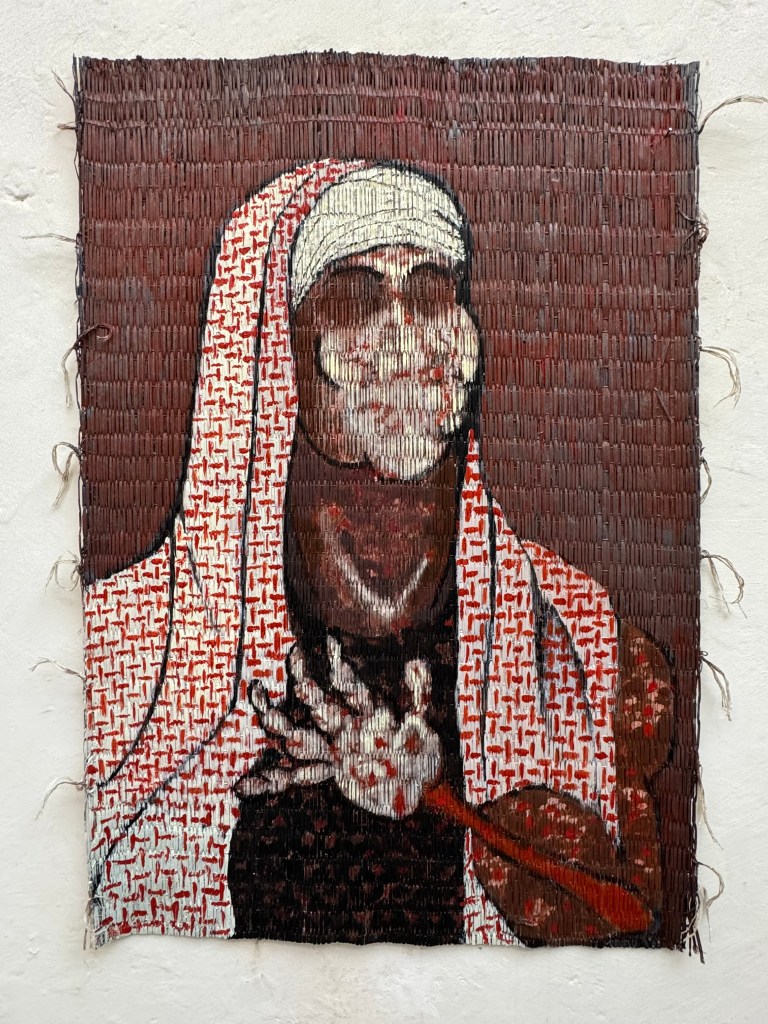
Prayer mat as canvas allows the paintings to become solemn incantations. These offerings of representation are achieved by the sanctity of the surface; an object of devotion has been repurposed as a testament to suffering. Pain seems to infiltrate the paint, as if it has always resided here, and has naturally settled upon the softly repetitive lines of the reeds. The fastidious control of a surface that must resist such precision imbues the works with a quiet authority. In this they are redolent of early cave paintings, but where the contours and imperfections of a rock face gave life to early man and his relationship with animals, Khan Shamim Akhtar’s works animate the desolation of an altogether more desperate theme.
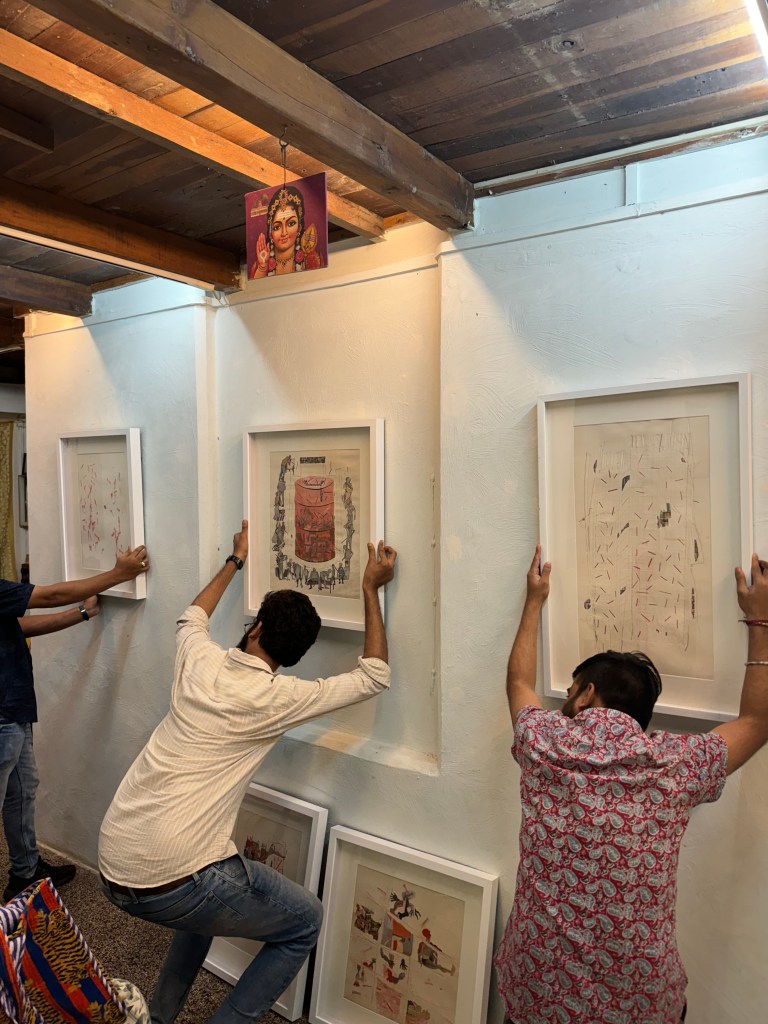
But do not mistake this choice of surface or topic as monocultural. This is a structure of faith that is able to move across religions; what could at a glance be a Madonna might not be; what seems to be a last supper is, but more specifically is the last supper of Ramadan. Akhtar’s work deftly navigates and overlays a range of motifs and ideas. The world he relays is torn, disorientating and disconsolate. Often the planes of a painting are jumbled and upturned; limbs protrude, corpses jostle, buildings crumble. There is no way to find logic or reason. Instead we are granted a range of choices to approach the destruction, and it is this plurality, this open-armed invitation to consider suffering that is the single unifying force behind the work.

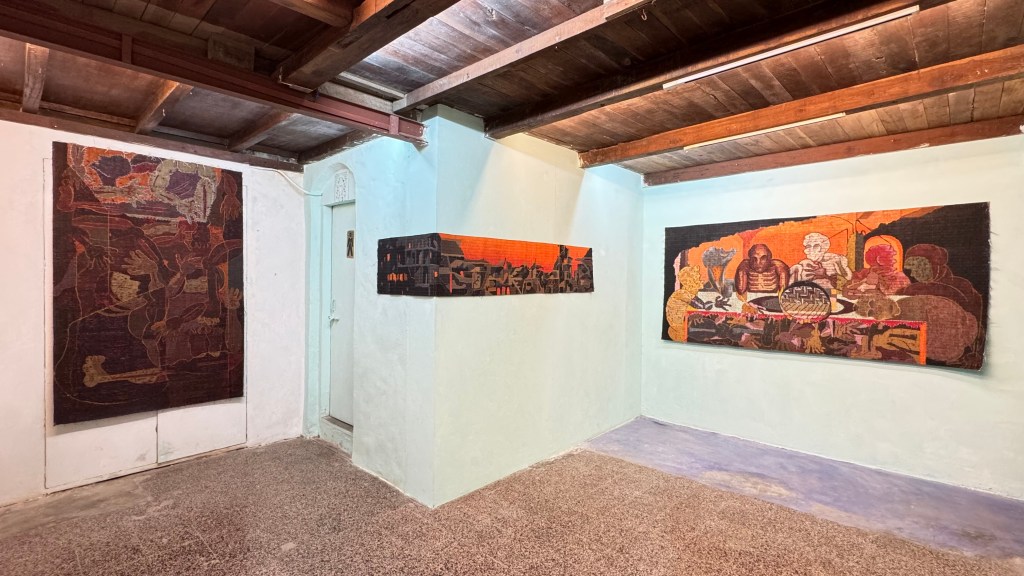
Deep global forces are at play. The hollow eyes of the figures pose frank questions; look at me, and try to understand how this has happened. The works offer us this opportunity. Their insistence is no more than a reflection, and their need is merely a soliloquy, of which, although as yet unrehearsed and undelivered, we already seem to know the words.

 G J Varley Art
Leave a comment