Gigi Scaria was born in Southern Kerala in 1973. His work is diffuse, ranging across installation, painting, sculpture, photography, video.

His most recent show (images below) swirls around the brain like a medieval warning against sin. The palettes are carefully sickly, the world is tattered, and we are to blame. Your eye slides about over abrasions and threats. It is all quite scary.
I am a little out of breath by the top of the stairs at Chemould Prescott Road. It’s the second Thursday of the month, and everyone is demurely strolling about Colaba looking chic. I’m sweaty, legs wobbly, and behind the vast door is this delicately painted nightmare.
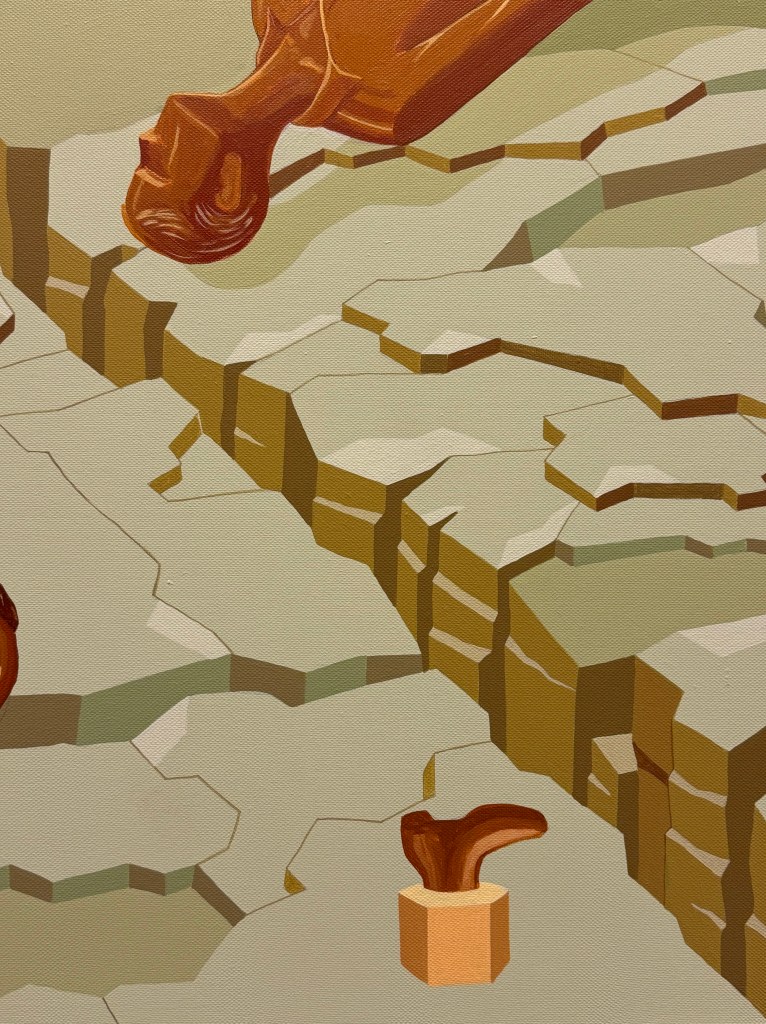
Scaria’s earth is rent with cracks. All is askance, plaintive, and broken. It’s a bad state of affairs. The waiter offers you gin. Breughel leers at you as you take it saying death has triumphed. The canapes are delicious but you can’t help but think you’re part of the problem (tucked in an icy room on a sweltering Thursday).

Not too ashamedly, Scaria says that humans have fucked it. The roads in his paintings that loop around and into nowhere are not figments of some dystopian vision. They are the same roads I have just used to get to here. I even have a photograph, (taken without expectation) exactly 60 minutes before. Now it is in front of me, painted.


The show is a product of lockdown, and in amongst the returning tides of the natural world to places where it hadn’t ventured for years, or had been forcibly removed, Scaria’s world is the interface of abusive human involvement.

It’s all on the nose, as if he has translated something we recognise into paint. We do hang lightbulbs from trees. Bombay is a construction site full of ever more fantastical projections into the sky. I live in one such building.
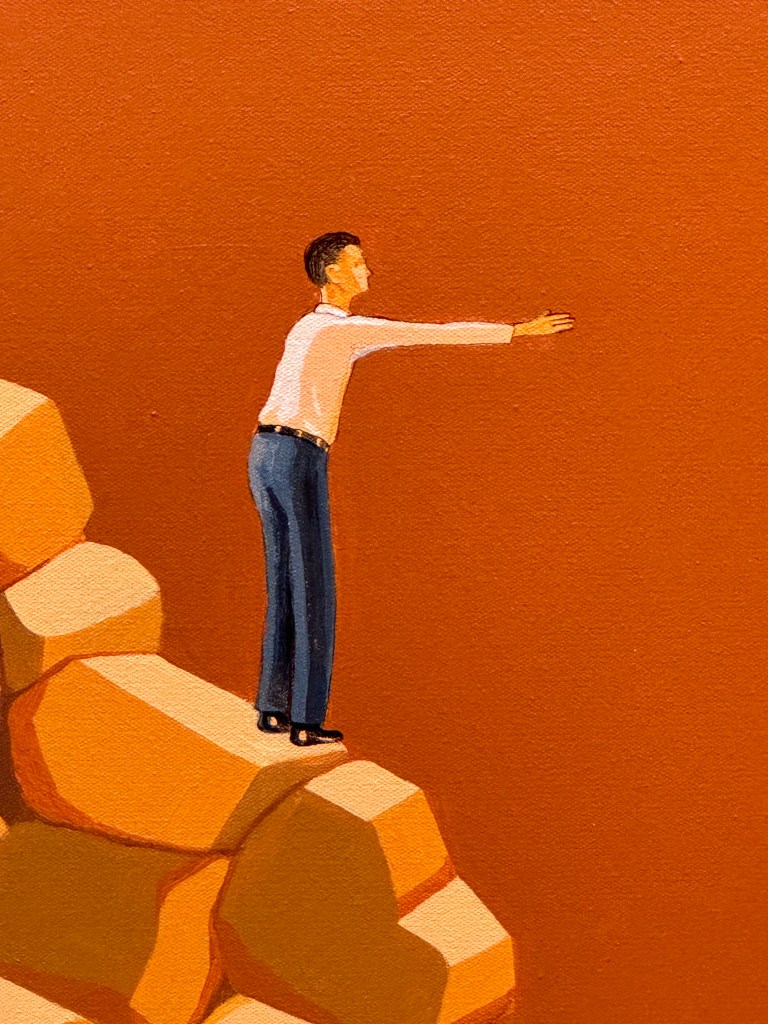
So it hits. His paintings reinforce themselves proficiently, but the suggestion works best when it is laid on a little more thinly; the caged elephant facing the wall is a bit blunt, whereas the man reaching out into an empty distance is better judged. He looks confused and regretful. It is probably too late, he seems to say, and I’m sorry.
On a lighter note, the paintings are best for their painterliness. They are full of starched pinks, cadaverous greens, and midnight yellows. Like eco-orientated Hoppers there is a stillness to them in which, cleverly, you seem to be able to spend time, watching, listening. You are invited to think about how we might get out of this. If you’re feeling robust, catch Biophilia until the 14th of October.

 G J Varley Art
Leave a comment